Although the kidneys are frequently affected, involvement of other organs has been reported, mostly the gastrointestinal tract and the lungs 91,115. TMA was also described in autologous HSCT, where CNI and mTORI are not used. In those cases, aggressive conditioning regimens may act as triggers for TMA, especially when platin-based drugs are required 115, 116, 117. In allogenic HSCT there is at least one study showing that TMA can occur in patients in which CNI and mTORI were not used 114.
Chemotherapy
Plasmapheresis plays a central role in TTP and remains an invaluable asset in other forms of TMA, at least in particular situations. This technique replaces patient plasma with donor plasma, allowing the removal of potential endothelial damaging agents or autoantibodies, and the replacement of certain molecules essential for endothelial function, such as ADAMTS13 10. Notwithstanding the rarity of TMA, early recognition and treatment are essential to minimize its burden, including dialysis-dependent chronic kidney disease (CKD). There are a few therapeutic options, with support therapy and drug withdrawal being the most widely accepted. The 43 evaluable articles reporting group data described 46 patient groups with TMA attributed to 12 drugs, including 3 drugs which were not described in the reports of individual patients. One of the 12 drugs, cyclosporine, accounted for 20 of the 46 patient groups (43%).
Drug-induced Thrombotic Microangiopathy: Incidence, Prevention And Management
Plasminogen (PLG) is a circulating glycoprotein known to hinder platelet aggregation through its protease form, plasmin. PLG variants can decrease proteolytic activity of plasmin and trigger TMA. Complement blockers may be helpful in select cases, and trials in this disease space are ongoing.
Team 2: Secondary TMA
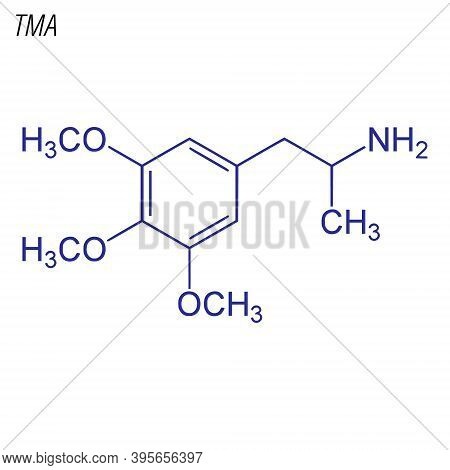
He is a graduate of Hebei Medical University, Shijiazhuang, Hebei, China, and completed his residency and chief year at Hackensack Meridian Health – Palisades Medical Center in North Bergen, NJ. He has special clinical interest in management of CKD and transplant nephrology. He would like to work towards minimizing disparities and bringing equality in kidney care. The TMAs are substituted amphetamines, however, their action does not resemble that of the unsubstituted compound amphetamine, which is a stimulant and not a psychedelic. It is reported that some TMA’s elicit a range of emotions ranging from sadness to empathy and euphoria.
Thrombotic Microangiopathy (TMA)
The overactivation or deregulation of complement system is not proven in DITMA patients and, consequently, indications for eculizumab treatment are limited. Some Authors (Cavero et al., 2017; Caravaca-Fontan and Praga, 2019) suggest to use the anti-complement therapy only in case of lack of improvement of hematological parameters and/or renal function recovery after causative drug discontinuation. This approach lacks supporting evidence, which is currently based on case reports and case series. Other Authors (Duineveld and Wetzels, 2019)do not suggest the use of eculizumab in secondary DITMA cases, relying on data indicating that renal outcome was not significantly altered by the use of the complement inhibitor. Moreover (Grall et al., 2021), reported a significantly better kidney response (83% vs. 64% of complete/partial recovery) and kidney outcome (eGFR 45 vs. 33 ml/min/1.73) in 13 patients with gemcitabine-induced TMA treated with anti-complement therapy. However, conflicting results were reported by previous articles gemcitabine-induced TMA treated with C5-inhibitor (Al Ustwani et al., 2014; Daviet et al., 2019).

Chemotherapy-Associated Thrombotic Microangiopathy
The 344 articles reporting individual patient data described 586 patients with TMA attributed to 75 drugs. For 51 of these 75 drugs, we attributed the potential association with TMA to an immune-mediated mechanism; for 26 drugs, we attributed the association to a toxic mechanism. For 2 drugs, gemcitabine and oxaliplatin, most reports were consistent with a toxic mechanism but each of these drugs also had reports consistent with an immune-mediated mechanism. Nine (12%) of these 75 drugs (clopidogrel, cyclosporine, estrogen/progesterone, gemcitabine, interferons, mitomycin, quinine, tacrolimus, ticlopidine) accounted for 448 (76%) of these patient reports. In a small earlier study of 26 patients with hypertensive emergency and TMA on kidney biopsy, 69% had evidence of complement activation, and half had pathogenic variants in complement genes.

Table 1 Studies Of Chemotherapy-induced Thrombotic Microangiopathy Treated With Eculizumab
All‐cause mortality was also higher in patients who have had an acute episode of TTP compared to the general population which was not fully accounted for by TTP related deaths. Causes of thrombotic microangiopathy are listed below, with additional details about more common etiologies. The mortality rate of cancer-related TMA is high due to its association with disseminated malignancies or withdrawal of chemotherapy. Coaches and scouts (or you, our reader) can use several tests to evaluate the presence of functional complement dysregulation in addition to testing for genetic complement mutations (Figure 3). Of note, approximately 10% of affected patients carry more than one variant. Disease penetrance is approximately 50%, therefore a precipitating event (ie, infection in children, pregnancy in adults) may be necessary to manifest the disease.
These data suggest a link between HSCT-TMA and GVHD, possibly sharing a not completely understood pathological mechanism. Moreover, several authors propose an aggressive treatment of GVHD in patients with HSCT-TMA 88, 94. The ubiquitin proteasome pathway is critical in the cell cycle, destroying targeted proteins. Bortezomib, carfilzomib and ixazomib act through proteasome inhibition, preventing the degradation of pro-apoptotic factors. Presently, they are used in several monoclonal gammopathies 56, including multiple myeloma 13,75, 76, 77. Carboplatin has very few cases reported, mostly in coadministration with drugs like gemcitabine, docetaxel or trastuzubam 51, 52, 53.

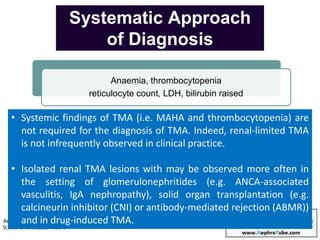
In this review we use the term complement‐mediated aHUS to describe aHUS where there is dysregulation of the complement system (Figure 2). The clinical presentation of TMA can vary, and the differential diagnosis is wide, therefore laboratory tests are important alongside a thorough history and examination. Thrombocytopenia, MAHA, and end organ damage are the common elements of all TMAs. MAHA is caused by red blood cell fragmentation in the microvasculature, with schistocytes seen on peripheral blood film. Lactate dehydrogenase (LDH) is raised due to tissue ischemia and cell lysis.
The pathogenesis of MMC-induced TMA involves direct endothelial toxicity 18,20, although immune-mediated reactions have also been described 21,22. TMA is a well-recognized complication in Oncology setting, either as a consequence of cancer or of its treatments. It is a rare but potentially life-threatening complication, in a group of patients whose prognosis is already worse than that of the general population. Thrombotic microangiopathy is a syndrome triggered by a wide spectrum of situations, some of which are specific to the Oncology setting. It is characterized by a Coombs-negative microangiopathic haemolytic anemia, thrombocytopenia and organ injury, with characteristic pathological features, resulting from platelet microvascular occlusion. In systemic lupus erythematosus (SLE), scleroderma renal crisis (SRC) or catastrophic antiphospholipid syndrome (CAPS) presentations with TMA are well recognized although the mechanisms are unclear.
- Variants in Thrombomodulin (THBD), a transmembrane glycoprotein with anticoagulant properties and a negative regulator of the complement system on vascular endothelial cells, may lead to a TMA.
- For DITP, the target condition is defined simply by a platelet count less than 100,000/µL.
- Thrombotic microangiopathies are rare, life-threatening diseases whose care involves physicians from multiple specialties.
- However, one of them was simultaneously treated with bevacizumab and, several years before, the 3 patients were treated with platins 54,56.
Evaluation Criteria
For instance, although increased serum LDH is characteristic of TMA, extreme elevations are atypical and may suggest tumor lysis syndrome 144. Several mechanisms for TMA in solid tumours have been proposed, although its pathogenesis is not completely clarified yet 141. The mechanisms remain unclear, and additional cases are needed before TMA can be reliably attributed to CPIs.
Anti-C5 Monoclonal Antibody
- Laboratory evidence of progressive response to treatment was documented and, following 11 doses, the patient achieved a complete laboratory and clinical response and is currently alive in complete remission.
- In general, TMA related to solid tumours has a very poor prognosis, probably because most patients present metastatic disease.
- Lactate dehydrogenase (LDH) is raised due to tissue ischemia and cell lysis.
- The alternative pathway was an MVP in NephMadness 2019 for the Complement Region.
Some studies, still on phase II/III, already show encouraging results 93. Several studies evaluated plasmapheresis efficacy in this setting, with controversial evidence. Some were not controlled, presenting numerous biases, such as different disease severity, heterogenous outcome evaluation, and the concomitant use of rituximab and defibrotide. The disappointing results may be explained by the fact that ADAMTS13 deficiency is not involved in the endothelial injury in this setting 90,91,99,129.
When there’s an underlying cause that triggers TMA, it’s considered a secondary form of the disease. When the kidneys are involved, a person can have abnormal kidney function. While small blood vessels anywhere in the body may be affected, the kidneys and the brain are among the organs most likely to experience TMA, which can lead to problems with organ function. While the condition is often treatable, the outlook for someone with TMA depends largely on the underlying cause of the disease. Doctors have not yet determined exactly why they occur, but they usually only happen to people who already have another chronic medical condition.
This case report described two patients who developed microangiopathic hemolysis and thrombocytopenia following levofloxacin treatment of respiratory tract infections. Both cases resolved after drug cessation; the first patient received also therapeutic plasma exchange. Moreover, according to consensus opinion (Palma et al., 2021), regardless of whether a toxic or immune-mediated form, a trial of TPE is recommended in all patients with a suspected diagnosis of severe DITMA, in addition to suspected-causative drug suspension. During TPE, platelet count, haemolysis lab tests and renal function should be carefully monitored.