The dark web is a part of the internet that isn’t indexed by search engines. You’ve no doubt heard talk of the “dark web” as a hotbed of criminal activity — and it is. Researchers Daniel Moore and Thomas Rid of King’s College in London classified the contents of 2,723 live dark web sites over a five-week period in 2015 and found that 57% host illicit material. If you get a reliable vendor, you should procure the services to stay safe when accessing the dark web. You can also run a dark web scan to see if your information has been leaked on the dark web. This dark web monitoring will help you track illicit activities and minimize the risks of cyber-attacks.
For instance, services like ProtonMail and SecureDrop (mentioned above already) have hidden sites for their users who live in countries with high levels of censorship. With the onion browser, you can access ordinary HTTPS websites on the web. This is a great way to improve your privacy because Tor isolates each website you visit, meaning third-party trackers and ISPs can’t reveal your identity. It works by sending internet traffic through volunteer-operated nodes all over the world.
Unraveling The Truth About The NIST’s New Password Guidelines
It is possible, conventional protocols used on the internet might not work on the darknet. In addition to traditionally forbidden trade, the dark web became a hub for the sale of stolen information. Credit card and social security numbers are routinely purchased, as are passwords for e-mail accounts—sometimes en masse. In July 2016, passwords for roughly 200 million Yahoo! accounts appeared for sale.
Without links from previously indexed sites, the search engines cannot find them. That is why getting links from other pages is a basic principle of search engine optimization (SEO). Anyway, once you’ve got the VPN you can be sure that your IP won’t lead back to you, and then you’re going to need the Tor browser. To understand the difference further, let us go over the basics of how internet search engines work.
Method II – VPN Over Tor
The dark web is a controversial part of the internet, famous for being a hotbed for illegal and criminal activity. Read our comprehensive “what is the dark web” guide to understand how it works and the risks and benefits. The terms “dark web” and “deep web” are often conflated and used interchangeably, mainly because the former is part of the latter. Privacy, which is usually provided by encryption, is another benefit of the deep web.
A Dark Web Search Engine
Interestingly, even Facebook can be accessed as a Tor-hidden service, allowing users in countries with no legal access to its platform to visit the website safely. Apart from this, Tor allows users to access URLs ending with .onion through its ‘hidden services’ functionality. Users need this browser to access this special category of websites. The dark web was originally a domain exclusively used by cybercriminals and governments. Today, this is no longer true–advanced encryption technologies have made the anonymization of web surfing a hassle-free affair for regular users. Standard search engines index these websites and are accessible without special configuration.
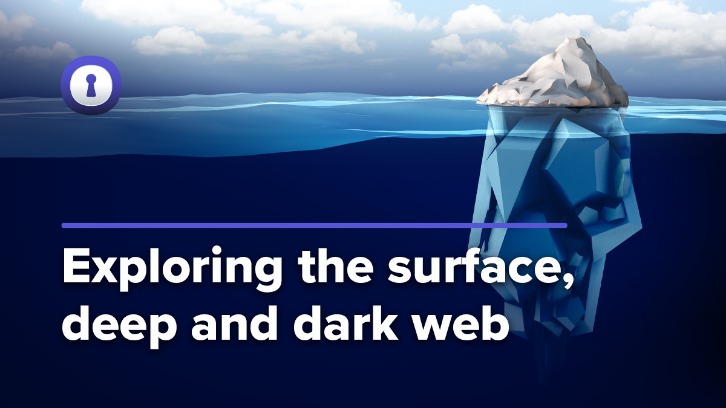
This is the part of the Internet that is visible to search engines like Google and accessible via normal web browsers. The Gray Web is referred to the part of the Surface Web where fraudsters discuss or research their activities. However, the Surface Web represents only the tip of the iceberg when it comes to the internet – the majority of it is actually hidden. On the other hand, the dark web welcomes more distinct groups of users, like criminals, whistleblowers, or political dissidents, who leverage off the anonymity the dark web provides.
How Safe Is The Dark Web?

Most websites, like internet banking, government institutions, social media platforms and healthcare institutions, hold valuable personal data — a treasure trove for cybercriminals. Beyond the paywalled and pay-to-access content, the deep web has crawlable web pages that aren’t indexed because the owners have blocked search engine crawlers from accessing them. This includes websites in the design stage and draft blogs in content management systems such as WordPress. Because the deep web is not fully-indexed with mainstream search engines, often the only way to find such sites is to know the exact internet address to use. There are some specialized websites or search engines that catalog some deep websites. For instance, academic resources on the deep web may be found using platforms like PubMed, LexisNexis, Web of Science, or Project MUSE.
It also keeps the graphical copy and text of the page for better accuracy. The social media giant is also aware of the many attempts by repressive regimes to restrict its access. After all, it enables users to connect and communicate with each other from around the world. It will offer you an additional layer of encryption to access the deep parts of the internet.
The threat can extend to your entire network of devices connected to the internet. Remember that illegal activities can still incriminate you, whether you are using a Tor browser. For example, you shouldn’t pirate copyrighted material, engage in terrorism, or share illegal pornography. Nowadays, many people use the Tor browser to surf the public internet and navigate the deeper parts anonymously.
Law Enforcement Monitoring
Over the centuries, when technology became advanced, humans built machines capable of diving into the depths of the oceans. That’s how we were able to discover the remains of the RMS Titanic. The search engine crawlers do the same work as done by the explorer submarines.
- If a law enforcement agency seizes or infiltrates a server to investigate a user’s dark web activity, they will find no data or Tor browsing history.
- The Deep Web is a section of the Internet that is inaccessible via search engines but can be accessed via normal browsers.
- The good news is that there is a much faster version of privacy technology that is similar to Tor, albeit much faster.
- Unlike the Dark Web, sites on the Deep Web can be accessed using normal web browsers like Firefox, Google Chrome, and Safari.
- The dark web is a subsection of the deep web including websites that one can only access through purpose-built web browsers.
WANT TO TRY THE TOP VPN RISK FREE?
- With many Tor-based sites being overtaken by police authorities across the globe, there is a clear danger of becoming government target for simply visiting a dark website.
- Note that engaging with the content in any way is not only distressing but could also put you at legal risk.
- The deep web is essentially the part of the internet that is not indexed by search engines like Google or Bing.
- The dark web is a hidden part of the internet not indexed by regular search engines, accessed through specialized browsers like Tor.
- Law enforcement agencies keep an ear to the ground on the dark web looking for stolen data from recent security breaches that might lead to a trail to the perpetrators.
- It also includes any content that its owners have blocked web crawlers from indexing.
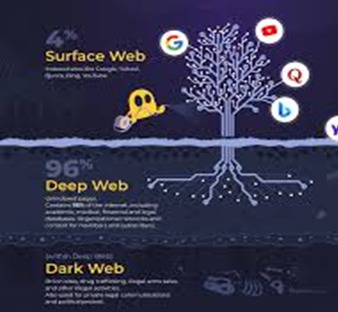
In Tor’s case, this is facilitated by routing encrypted traffic through layers of relays around the world. The deep web is essentially the unindexed portion of the web that search engines cannot access. The Darknet is a subset of the Internet operating over encrypted, anonymous overlay networks that require special software like Tor, Freenet, or I2P. In fact, it is likely some 500 times larger than the surface web and may contain as much as 96 percent of online content.
How Does Google Pixel 3 Stand Against Other Premium Smartphones?
The dark web is a layer of the internet where users can fully mask their IP addresses in order to anonymously access or share certain content. The anonymity provided by the dark web does indeed make it ideal for people looking to engage in illicit activity. But the dark web isn’t a violent or criminal place in and of itself — it just depends on how you use it.

The dark web has a narrower scope, comprising a collection of purely non-indexed websites not searchable via regular web browsers. Most dark websites are used for illegal and illicit activity, but a few legal sites exist. According to Brittanica, the dark web makes up 0.01% of the deep web. The deep web gives users access to far more information than the surface web.
Regardless of being a business, parent, or any other user of the web, you’ll want to take precautions to keep your information and private life off the dark web. Understanding that the nature of the internet meant a lack of privacy, an early version of Tor was created to hide spy communications. Eventually, the framework was repurposed and has since been made public in the form of the browser we know today. The dark web may also be put to good use by whistleblowers, who can leak classified information on the dark web using websites such as Wikileaks. Special tools–the Tor Browser or the Invisible Internet Project (I2P) network–are needed to overcome these obstructions. The tools to carry out the cyberattack may have been bought off a dark web marketplace, but the attacker would propagate the attack using mediums available on the standard web (such as email or chat).