Furthermore, like (+)amphetamine, MDMA was a potent locomotor stimulant58 whereas PMMA failed to increase mouse locomotor activity up to doses of 30 mg/kg (higher doses were not examined). Because MDA and both its optical isomers substituted in MDMA-trained rats,53 it seemed that aryl substituents, rather than the N-methyl group, were dictating the stimulus action of these agents. Beta-phenylethylamine (β-PEA) is a well-known and widespread endogenous neuroactive trace amine found throughout the central nervous system in humans.
Figure 13
Beta-phenylethylamine (β-PEA) is well known as an endogenous neuroactive trace amine and is widespread throughout the central nervous system of rodents 1. In particular, β-PEA is synthesized within nigrostriatal and mesolimbic dopamine (DA) regions, such as the striatum and nucleus accumbens 2, and the highest level of β-PEA is found in these brain regions 3,4. Thus, it is known that β-PEA inhibits the uptake of DA and promotes the release of DA in the mesocorticolimbic pathway 5,6. Hossain et al. also showed that β-PEA increased extracellular DA via the DA transporter (DAT) and that increased DA levels induced by β-PEA were inhibited by a DAT inhibitor in Caenorhabdits elegans DAT-1 expressing LLC-pk1 cells 7.
Antipyretics have no place in the treatment of drug-induced hyperthermia as they work by lowering the hypothalamic set point in febrile patients. There is some concern that hyperthermia occurring in excited delirium results from specific dopamine transport derangements as occurs in neuroleptic malignant syndrome 47. However, as mentioned previously, neuroleptics have a long history of safe use in undifferentiated agitation, and it is felt their benefit of use outweighs this risk. It is essential to be cautious about using phenethylamine drugs and supplements, especially when mixed with other stimulants or taken in excess.
Healthy School Lunch Ideas (Plus Snacks & Other Meals)
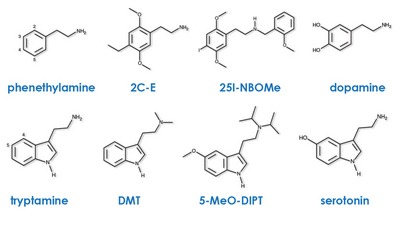
- Designer substitution to the 2C structure can result in increased hallucinogenic activity.
- Phenethylamine and its derivatives are classified as stimulants under the World Anti-Doping Agency’s (WADA) Prohibited List.
- Phenethylamine drugs contain this compound and are known for their stimulating effects, which can influence the central nervous system in both beneficial and harmful ways.
- On the other hand, phenethylamine supplements are probably dangerous for most people.
- Open-chain, flexible alicyclic amine derivatives of this motif are enumerated in key therapeutic targets, listing medicinal chemistry hits and appealing screening compounds.
There are 2-aminobenzoindanes which are phenethylamines with a one-carbon link tying the alpha-position of the chain back to the aromatic ring. And there are 2-aminotetralines which are phenethylamines which have a two-carbon link tying the alpha-position of the chain back to the aromatic ring. Both systems have been modified with the DOM substituent patterns (called DOM-AI and DOM-AT respectively), but neither of these has been tried in man.
There have been no published studies concerning the long-term use of phenethylamine, particularly when it is taken in its pure form. It is a very strong designer drug and with very strong effects to the body. A substantial amount of the drug is believed to be found within the brain and liver. There is very limited published literature on the effects of the drug in animals, despite the fact that it has been used for decades in veterinary medicine. This lack of research casts doubt on the effectiveness of the substance in treating canine epilepsy and can lead to dire consequences if it is ingested. Monoamine oxidase (MAO) supplements are another popular substance used by depressed patients to try and combat the nasty side effects of phenethylamine.
II PEA As A Neurotransmitter
The reagent contains the Propidium Iodide (PI) that allows us to discriminate viable from dead cells based on different permeability to DNA-binding dye. The natural next step was therefore to use the same protocol to analyze the genotoxicity of molecules belonging to another group of NPS, such as psychoactive phenethylamines. At the end of the treatment time, to analyze the MNi frequency in treated and untreated cultures, we used a new automated flow cytometric protocol that we recently developed in our laboratory and published. This protocol has numerous advantages over the standard procedure via optical microscopy, including speed and economic efficiency, as it reduces sample preparation and analysis times by up to 80% with considerable cost savings.
What Are Phenethylamines?
One reason might be that they are unable to readily cross the blood–brain barrier. The concept of the blood–brain barrier (BBB) was proposed as early as 1900 by Lewandowsky14 (reviewed15) but was not fully appreciated for many decades to come. This means that most polar agents (i.e., those that are not very lipophilic – simple phenols, catechols, carboxylic acids, quaternary amines) typically fail (or display a reduced ability) to gain entry to the brain. Other agents, those possessing unprotected primary amines, such as PEA (1) or tryptamine – agents of moderate lipophilicity – if they penetrate the BBB, are rapidly metabolized by enzymes such as monoamine oxidase (MAO). As a consequence, polar agents usually possess minimal, if any, central activity. Our early studies involved the use of a peripheral rat fundus tissue preparation to investigate centrally-acting agents; the preparation was known to possess serotonin (5-hydroxytryptamine, 5-HT) receptors, and was also reported to possess tryptamine receptors.
Substituted Phenethylamine
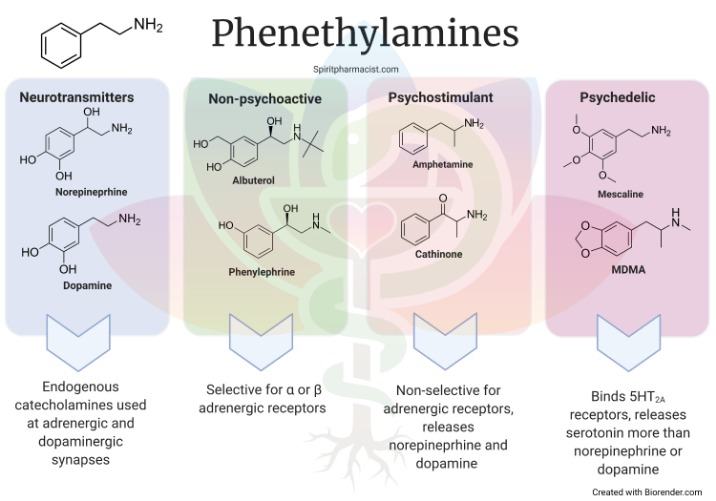
And, this conclusion was supported by being able to train the same group of animals to discriminate between the two optical isomers. However, technical difficulties precluded the use of this paradigm on a wide-scale basis. Nevertheless, the three-lever procedure provided “proof of concept” and was the first to show that animals could be trained to discriminate the stimulus effects of optical isomers of a given agent. There is only one phenethylamine that is a classic psychedelic, which is mescaline.
Methamphetamine
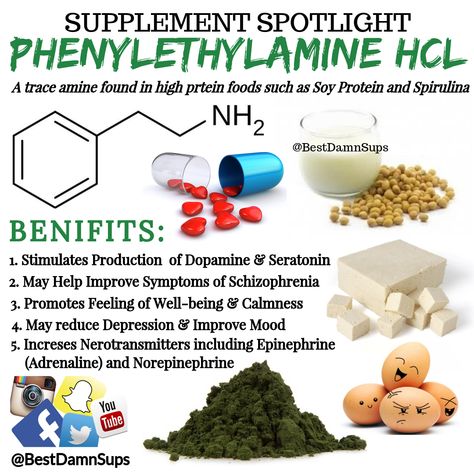
The sample size of this study prevents us from drawing any conclusions 17. Phenethylamine is produced in tiny amounts throughout the brain and spinal cord and is made from the essential amino acid phenylalanine, which is mainly found in protein-rich foods 3. While it won’t get you high, taking too much can cause side effects similar to those caused by the drug amphetamine, especially if taken with medications that alter neurotransmitter levels. Phenethylamine is considered a trace amine and is found in the nervous system, where it plays a role in brain circuits that release “feel good” hormones. The appropriate dose of phenethylamine depends on several factors such as the user’s age, health, and several other conditions. At this time there is not enough scientific information to determine an appropriate range of doses for phenethylamine.

In studying the SAR of MDMA as a discriminative stimulus, we found that the MDMA-stimulus generalized to PMMA (45), a drug of abuse that has been sold on the clandestine market as representing MDMA (although our studies pre-dated those reports). PMMA might be viewed as the simple 4-methoxy analog of methamphetamine (52; see later) or, alternatively, as the N-methyl analog of 4-methoxyamphetamine (PMA; 44). Both methamphetamine and PMA substituted in (+)amphetamine-trained rats.18 What was puzzling was that PMMA, which combines both functional groups, did not substitute in (+)amphetamine-trained animals but did so in MDMA-trained animals.
- The benzyl amine that results by the relocation of the amine group of MDA from the beta-carbon atom to the alpha-carbon atom is known, and is active.
- Computational docking analysis predicted that the 110 substituted phenethylamines investigated possessed moderate to strong binding affinity for the tubulin protein in the colchicine binding pocket with the top 10% showing comparable, but slightly less affinity that colchicine itself.
- Microtubules play a key role in cell division, through the formation of mitotic spindles, a structure that relies on the dynamic instability and precise dynamic stages of microtubule growth and shrinkage during mitosis16.
- Users frequently report a vivid intensification of colors, with the world taking on a kaleidoscopic quality.
Serotonin Level Testing: Methods, Importance, And Implications For Mental Health
As a central nervous system Stimulant, Phenethylamine stimulates the body to create some chemicals that may help with depression and other mental illnesses. As a central nervous system stimulant, phenethylamine is used to treat depression and many other mental illnesses. Most importantly, it is used for weight loss, sports performance, and improving mood and concentration.
Thus, the possibility that these compounds act not only on DAT but also on other targets should not be excluded. This evidence is very important from a toxicological and forensic point of view since, up to now, only acute poisonings following intake of medium-high doses of psychoactive phenethylamines have been observed in medical centers and described in clinical reports. The hypothesis that the repeated consumption of 2C-H, 2C-I, 2C-B, and 25B-NBOMe at low doses could proceed without people reporting serious acute side effects could appear reassuring, but instead is potentially alarming. Indeed, this phenomenon would be difficult or even impossible to detect if we analyzed only subjects who have hazardous behaviors or require hospitalization. In fact, there would be a potential “grey zone” of subjects whose use or abuse would not be screened 78; these subjects, by using active but still “safe doses” of 2C-H, 2C-I, 2C-B and 25B-NBOMe, could run into mutagenesis and carcinogenesis processes.
Comparative Pharmacology Of Amphetamine, MDMA And 4-MMC: Dopamine & Duration Of Action
After, a total of 5000 events, derived from viable cells, were acquired and analyzed using Guava Incyte software. The apoptotic cell percentages recorded in the cultures treated with phenethylamines different concentrations were normalized on those recorded in the untreated control cultures, accounted equal to 1 and expressed as apoptotic fold increase. These results were used to check that the apoptosis induction for each phenethylamine was similar or corresponding at most to a doubling of that recorded in the untreated control cultures. The study ended by analyzing the phenethylamines ROS induction in order to identify a possible mechanism underlying the genotoxic activity demonstrated. In fact, it has long been known how ROS such as 1O2, O2•−, H2O2, •OH, are involved in genetic damage 68,69,70. Our results highlighted a statistically significant increase in ROS levels for all genotoxic phenethylamines.