
Due to its largely unregulated nature, the probability of encountering scams is significantly greater than on the regular internet. Many websites are specifically designed to deceive users and steal their personal information, financial details, or cryptocurrency. Fraudulent services, such as fake hacking services, counterfeit document vendors, or Ponzi schemes promising unrealistic returns, are also prevalent. The anonymity afforded by the Tor network makes it easier for scammers to operate without fear of identification or prosecution, making it difficult for users to discern legitimate services from malicious ones. If you want to access the dark web, your first step toward a more private experience should be to secure your internet connection and data with a reliable VPN.
Tor Over VPN Vs VPN Over Tor: Which Should You Use?
Its key features include kernel hardening, application firewall, package security, filesystem encryption, meta-proxy encryption, and binary integrity. The US Naval Research Laboratory developed The Onion Routing (Tor) project in the late 90s. A network browser gives you access to sites with the ‘.onion’ registry operator. One option is to try DuckDuckGo’s .onion version, which is great for privacy. Other options include Ahmia and NotEvil, which focus on listing .onion links.
Recommended Dark Web Search Engines And Directories
You can conduct discussions about current events anonymously on Intel Exchange. There are several whistleblower sites, including a dark web version of Wikileaks. Pirate Bay, a BitTorrent site that law enforcement officials have repeatedly shut down, is alive and well there. Even with Tor and onion routing in place though, you’re not suddenly completely invisible and free to do whatever you want, without repercussions. Certain details of your traffic can be intercepted at the entry and exit points of the node, by the people running those nodes, if they know what they’re doing and what they’re looking for.
Connecting To A VPN Server
Once Tor Browser is successfully connected to the Tor network, users can begin to explore what are known as onion services, often referred to as websites on the dark web. These services utilize unique web addresses ending with the .onion top-level domain, signifying that they are accessible only through the Tor network. Unlike conventional web addresses that rely on the Domain Name System (DNS) to translate human-readable names into numerical IP addresses, .onion addresses have a distinct structure and function.
Then, simply click the operating system that you are using and download the file. The site offers downloads for macOS, Windows, Linux, and Android. While an iOS version of the official Tor browser is not available, there are Tor-compatible browsers available in the App Store.
Now that your connection is active, it’s encrypted and untraceable by your internet provider. Everything you do is protected by NordVPN, which is key to accessing the dark web and enjoying it privately. Onion sites aren’t really dangerous, but they could be when accessed through unfamiliar or suspicious links.

A Dark Web Search Engine
- The United States Naval Research Laboratory developed the technological framework for Tor in the mid-1990s.
- Go to the directory where you saved the downloaded Tor Browser installation file.
- When you have a free-to-use privacy browser that is easily distributed and offers users both support and community forums, it’s no surprise that some of those communities form around disreputable subjects.
- Freenet is still an experiment designed to resist denial-of-service attacks and censorship.
- Learn how to set it up, explore what it does best (and where it falls short), and discover why pairing it with a trusted VPN could give you stronger, layered protection against prying eyes.
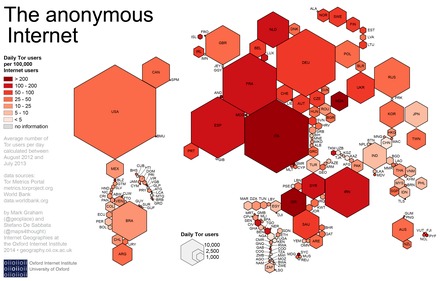
The Onion Routing project, which became Tor, introduced a publicly available version of the software in 2003. Three years later, a not-for-profit research education organization, The Tor Project, was established to manage the network. Although the network does not guarantee privacy, it makes tracking a person’s online activity very difficult, giving users an added level of comfort. According to Tor, on average about 2.6 million “clients” (users) directly connect to its network each day. Legitimate uses include sensitive communications and law enforcement investigations. Controversially, it is also used to distribute malware, defame individuals, and facilitate illegal activities on the dark web.
Is There A Search Engine For Onion Sites?
Accessing the Darknet typically requires special software, such as the Tor browser, which facilitates access to websites with .onion domain names. While the Darknet can pose significant risks, including exposure to illegal content and cyber threats, it also provides a unique space for communities seeking anonymity. Users often have diverse motivations for exploring the Darknet, ranging from privacy concerns to the pursuit of unfiltered information.

What Kind Of Content Is On The Dark Web?
Check onion links through trusted directories, user reviews, and reputation checks. The deep web includes non-indexed databases and private portals, while the dark web specifically requires Tor and includes .onion sites. Avoid sharing personal information, downloading unknown files, and engaging in illegal services.
Darknet websitescalled hidden serviceskept their locations secret by using “onion” addresses, accepting traffic only from the Tor system. To view a site like the now-defunct Evolution Marketplace, for example, an Internet user went to the Tor system, looked in a directory of hidden services, and found a list of relays for initiating contact with the service. The parties proceed anonymously to a third location to exchange information. As a crucial security measure, the Tor Project strongly advises users to verify the digital signature of the downloaded Tor Browser file, regardless of the operating system. This process helps to ensure that the file has not been tampered with or corrupted since it was signed by the Tor Project developers. Instructions on how to perform this verification are typically provided on the download page of the official Tor Project website or through a linked guide.
- A more recent and potentially more reliable method for discovering onion services is through the “Onion-Location” feature.
- This cryptographic basis ensures that the address is directly linked to the service’s identity within the Tor network.
- The Tor Network provided a way to open safe communication channels for political dissidents, while also offering a channel for American intelligence operatives to communicate from around the globe.
- The dark web addresses are a randomly-scrambled sequence that generates URLs, mostly hard to remember ones.
- On top of that, the provider offers perfect forward secrecy (PFS).
You’ve no doubt heard talk of the “dark web” as a hotbed of criminal activity — and it is. Researchers Daniel Moore and Thomas Rid of King’s College in London classified the contents of 2,723 live dark web sites over a five-week period in 2015 and found that 57% host illicit material. While not mandatory, using a VPN adds an extra layer of privacy and security by hiding Tor usage from your internet service provider. The hidden wiki is an encyclopedia like Wikipedia, which is in the deep web, is one of the most complete guides to access the pages with onion links. That is why in 2006 they created “the most private search engine in the world”, which does not record, track, or share your personal data. Over the years, they added many additional privacy features, such as “Anonymous View” for added protection.
Other dark web search engines worth investigating are Ahmia, Torch, NotEvil, and the Onion URL Directory—just type out some keywords for what you’re looking for. Some of these sites can be found through regular web browsers, but you’ll then need to switch over to Tor once you’ve got the onion links you want to follow. The Hidden Wiki is a popular directory listing useful .onion websites and dark web search engines. Founded by security researcher Juha Nurmi, Ahmia is essentially a list of “hidden” sites that do want to be found. Onion sites are “crawled” and added to the list provided their “robots.txt” file permits it, and if it is not on their blacklist of sites with abuse material.
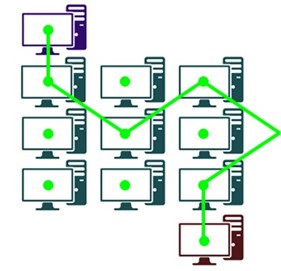
All of this keeps the sender anonymous thanks to how each intermediary node only knows the location of the previous and next node. Each of these nodes removes or “peels” away a single layer, which uncovers the data’s next node destination. When the final layer of the “onion” is reached and decrypted, the message arrives at its destination. He incorrectly believed he would never be caught for his activities with Silk Road.